- Actions
Published on 24/11/2025
Three Belgian projects highlighted in the Swiss German press Werk bauen + wohnen
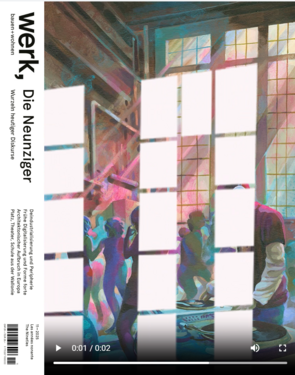
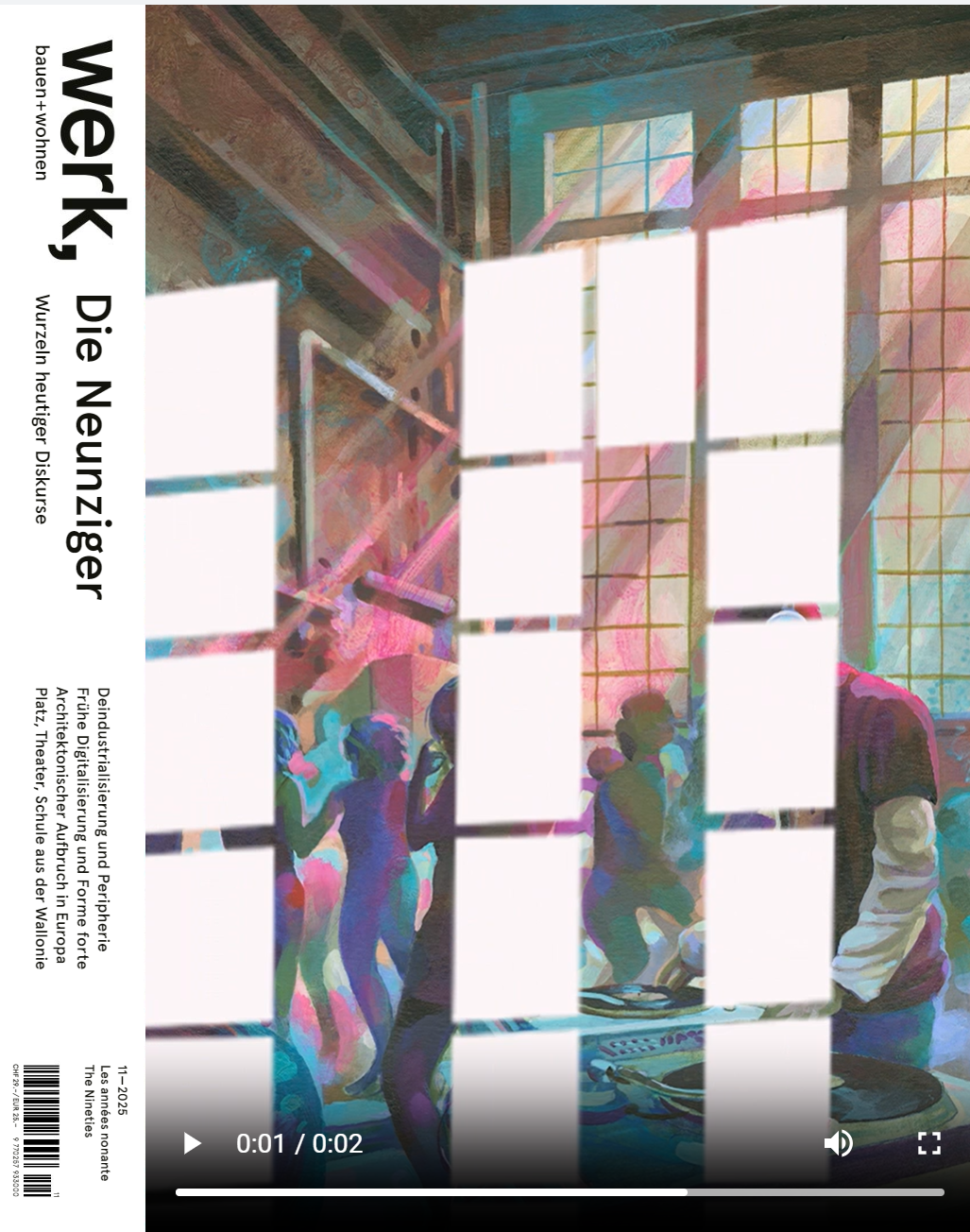
© werk bauen +wohnen Through its international press tours, Wallonia-Brussels Architectures builds connections between the architectural practices of the Wallonia-Brussels Federation and the perspectives of foreign critics.
These tours enable specialised journalists to discover recently completed buildings, meet their designers and understand the specific issues that shape architectural production in Wallonia and Brussels. The resulting publications help raise awareness among clients and institutions of the work carried out by architects in the Federation.
In November 2025, this dynamic took the form of a ten-page feature in the Swiss-German journal Werk, bauen+wohnen, a leading reference in contemporary architecture.
Three projects by offices active in the Wallonia-Brussels Federation are examined in depth, each revealing a distinct way of inhabiting, adapting or transforming the built environment.
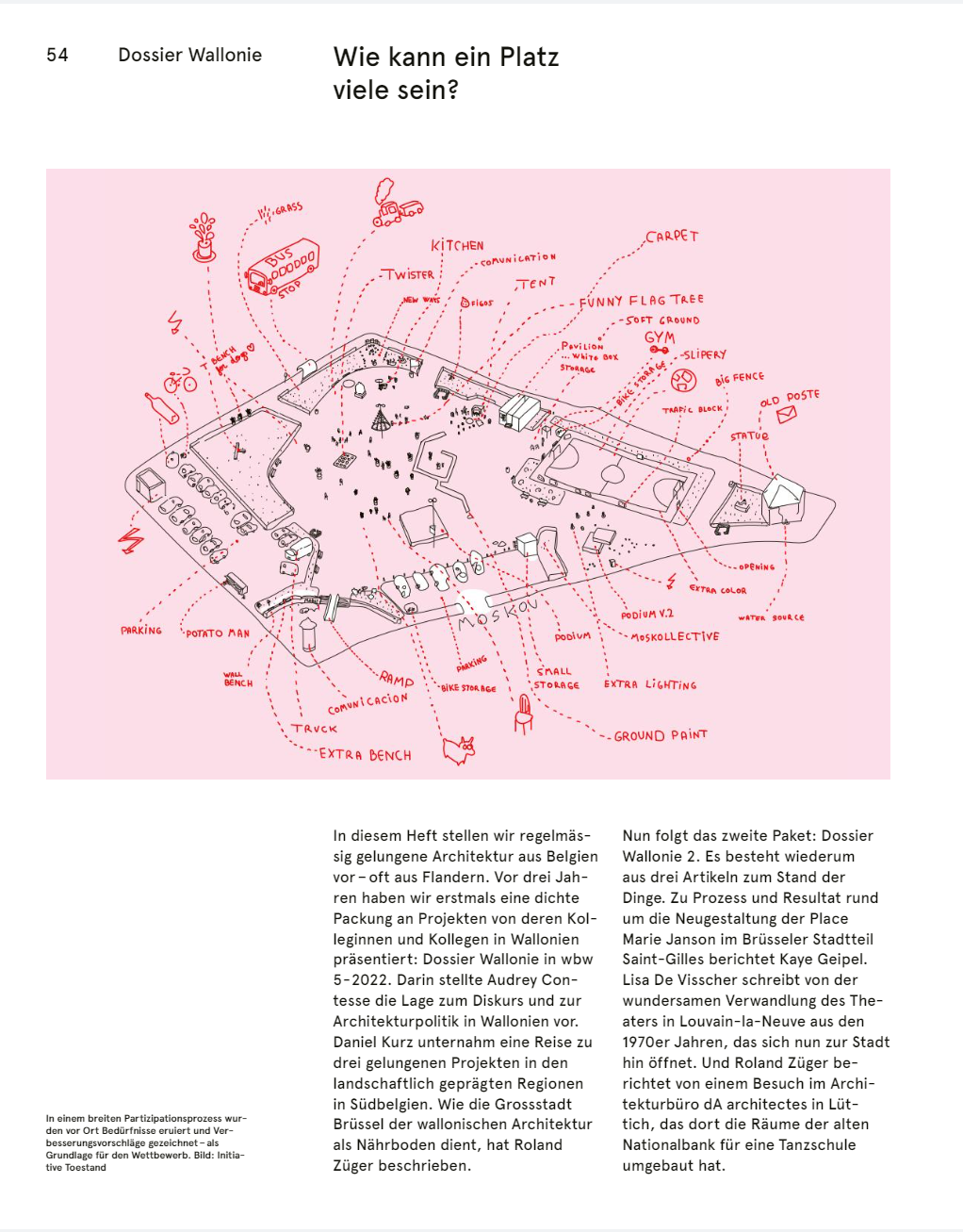
Place Marie Janson (Bruxelles) - VVV architecture urbanisme et Studio Viganò
In its pages dedicated to Place Marie Janson, Werk, bauen+wohnen analyses the transformation of a public space reinvented as a collective urban park, a place of encounter at the heart of Saint-Gilles.
The project relies on broad civic participation to shape the design process: a space that reconnects residents with their environment and becomes a social anchor within the neighbourhood. Continuous green areas and the presence of water enrich existing uses and offer a renewed reading of the central public realm.
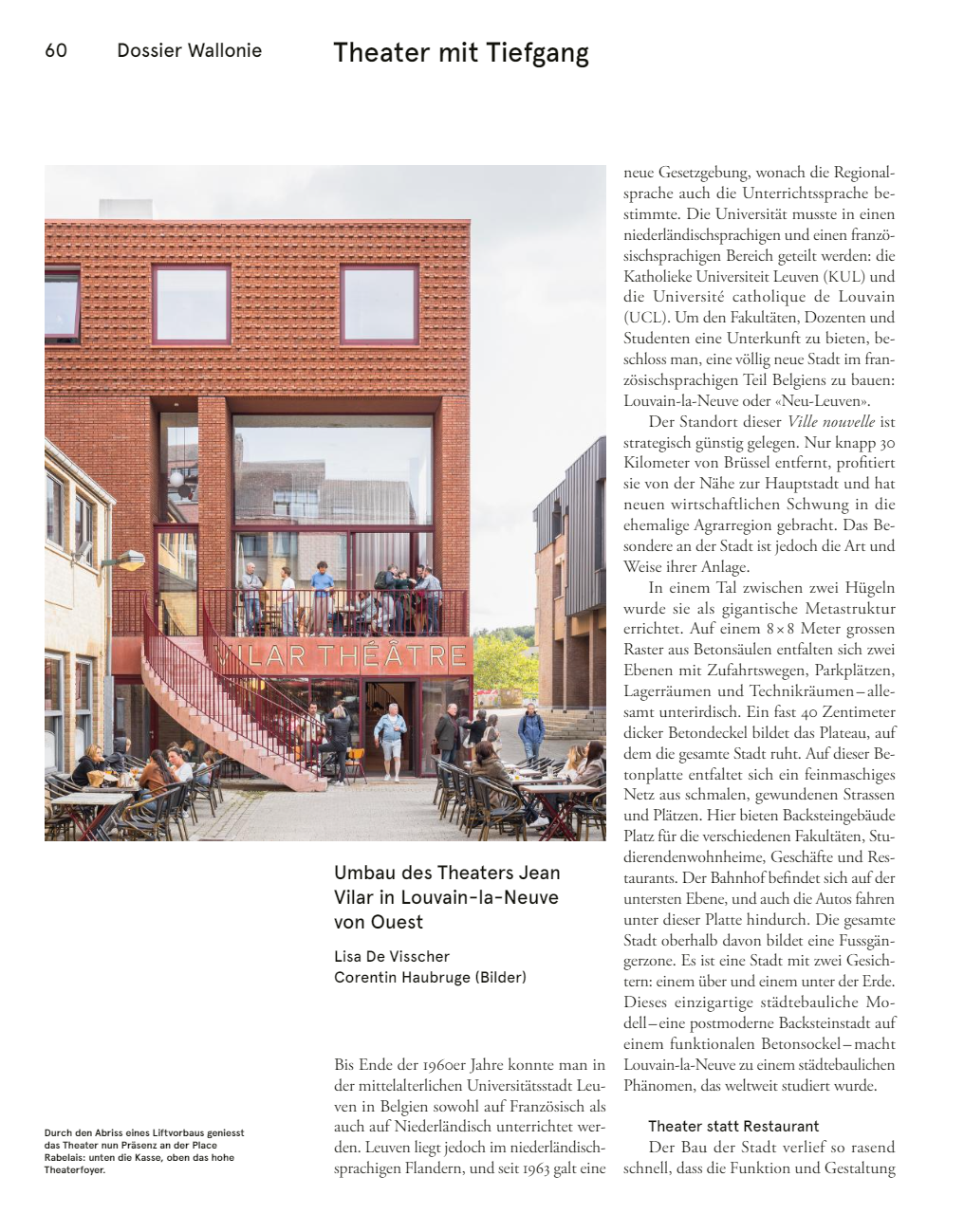
Théâtre Jean Vilar (Louvain-la-Neuve) - OUEST architecture
In Louvain-la-Neuve, the renovation of the Théâtre Jean Vilar gives new presence to a venue deeply rooted in the city’s cultural life.
Nominated for the Mies van der Rohe Award, the project is presented as a refined and comprehensive transformation of the existing structure—one that reconnects with the spirit of the place while projecting it into the future.The new façade, both restrained and expressive, acts as a genuine urban signal. It restores the theatre’s visibility in the everyday landscape, while the interior intervention carefully requalifies the public reception areas.
The review highlights the close relationship established between the theatre and its urban fabric, as well as the project’s ability to reflect the university and cultural context specific to Louvain-la-Neuve.
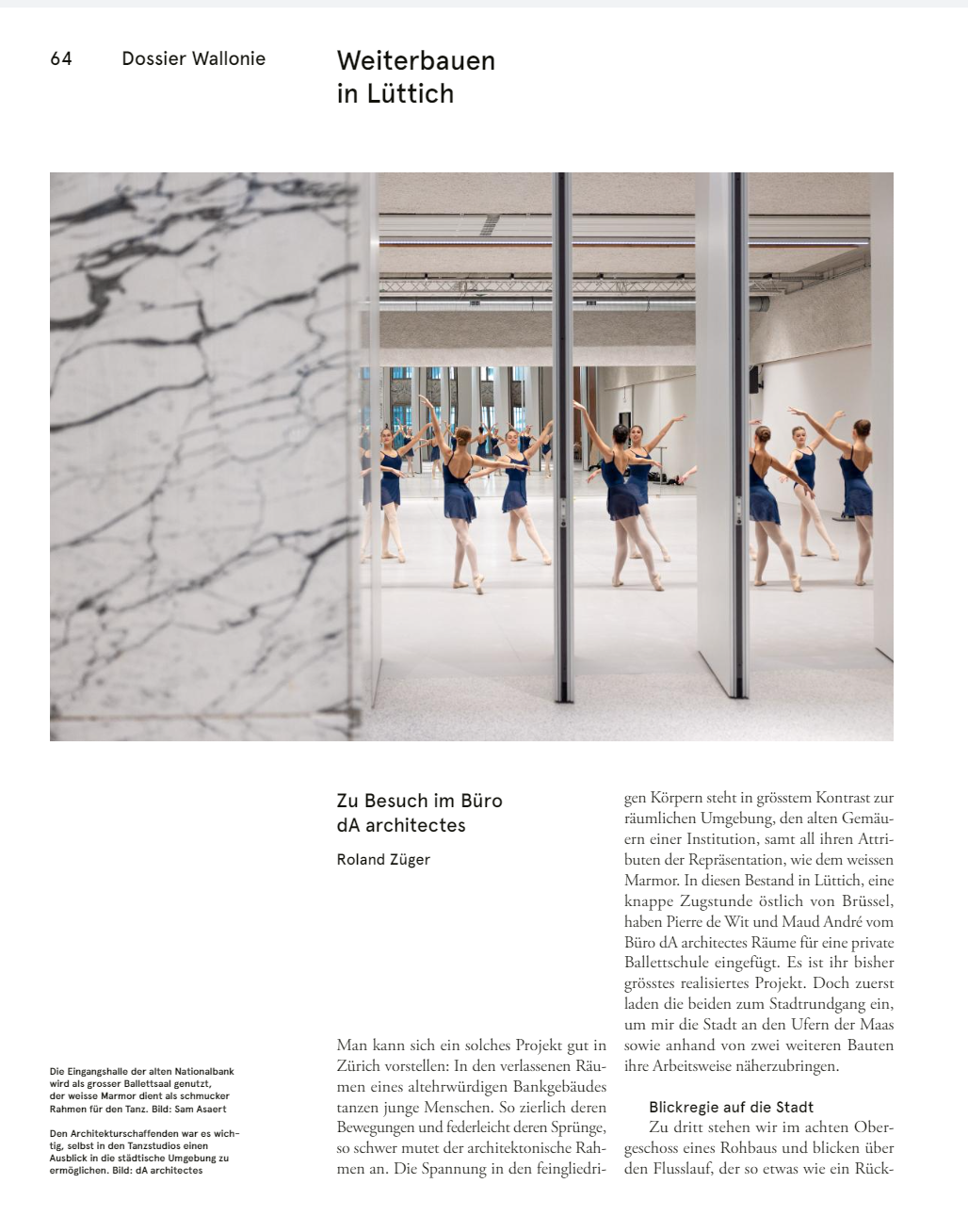
Mosa Ballet School (Liège) - DA architecture
The Mosa Ballet School showcases another form of transformation: the conversion of a former bank into a place dedicated to movement.
The “white bodies”- the ballet studios - gravitate around the existing structure, redefining the building’s spatial character.Light accompanies movement as it glides across these volumes, and the architecture is understood through the way dancers use the space: each area is conceived to support gesture and practice.
By integrating movement, light and the body in a coherent manner, the project offers a meaningful reference for the adaptive reuse of former bank buildings.

Wallonie-Bruxelles Architectures is a cultural and economic promotion agency for architects from Brussels and Wallonia on the international stage.