
- PublicationsPages: 208 Format: 17 x 23Sous la direction de
Rafaël MagrouPrice
35 €ISBN
978-2-8047-0238-0Distributor Belgium
Adybooks – André Delruelle – andre.delruelle@adybooks.beDistributor Europe
France – Suisse – Canada : Sofédis – portail@sodis.frPublished on 27/08/2015
Théâtre de Liège. En transparences
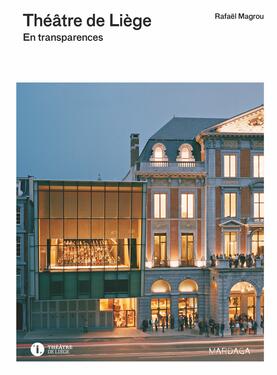
© WBA It's the story of a place once dedicated to culture and sciences that became, in 2013, a theatrical tool, a place of life in the city, an influential scene throughout national and European level.
Having in common the prefix trans-, this volume relates, in 16 chapters, the story of the transformation of the Société Libre d'Emulation's building into the Theater of Liège.
The book takes the reader into all the dimensions of the building, from its façade to its main room, without forgetting the backstage and the dressing rooms as well as the production workshops.
The patrimonial aspect of the theater as well as the modern intervention which made it to become the first scene of Wallonia are explained by this book. It will also describe its strategies of theatrical programming in an interview with Serge Rangoni, its director since 2004.
The book takes the reader to understand the work and the choices of the architects Pierre Hebbelinck and Pierre de Wit by illustrating them with Marie-Françoise Plissart's pictures - artist who followed the various steps of the transformations - with François Brix's pictures and unpublished materials, such as the intervention of artist Patrick Corillon.
- PublicationsSous la direction de
Jean-Marc BasynAuteur
Sous la direction de Jean-Marc Basyn. Articles de : Véronique Boone, Tom Broes, Angélique Campens, Maurizio Cohen, Robby Fivez, Jacinthe Gigou, Gérald Ledent, Réjean Legault, Géry Leloutre, Laura Lievevrouw, Giulia Marino, Arthur Schweisthal, Sophia Sentissi, Emma Simonin, Iwan Strauven, Stephanie Van de Voorde, Ellen Van Impe, Tom Verhofstadt.Published on 28/04/2026

Brutalisme Bruxelles
Ce premier ouvrage de référence consacré au brutalisme à Bruxelles et sa proche périphérie aborde ce mouvement des années 1950 – 1980 dans sa diversité : immeubles de bureaux, logements, campus universitaires, hôpitaux, centres culturels, lieux de culte, stations de métro ou encore interventions d’artistes. [...]
- PublicationsAuteur
Rédaction : AgwA, architectes Jan De Vylder et Inge Vinck, Photos : Filip DujardinPublished on 20/04/2026
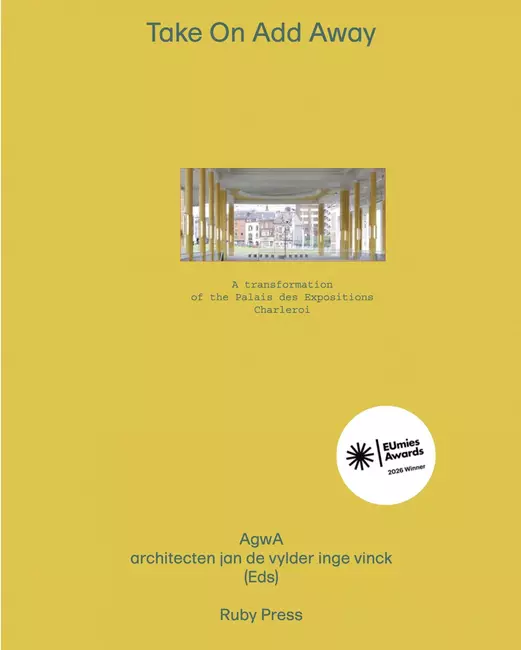
Take On Add Away – A transformation of the Palais des Expositions Charleroi
Un projet de transformation remarquable primé au Mies van der Rohe Award 2026 Un monument à l’optimisme industriel — et à sa réinvention radicale [...]
- PublicationsAuteur
Victor MEESTERS (Rotor) et Vincent LAUREAUPublisher
Collection « Villes terrestres »Published on 03/02/2026

20 PETITES LEÇONS D’ÉCONOMIE DE MATIÈRE
Un manuel de réemploi pour tous les constructeurs – étudiants, professionnels et amateurs. 20 exemples concrets pour que le réemploi devienne enfin la règle. [...]
