
- PublicationsText: Lynn Margulis and Dorion Sagan, Jacques Lafitte, Adrien Verschuere in conversation with Hans Ulrich Obrist Language: English 176 pagesPrice
38 €ISBN
978-3-96098-683-6Published on 22/10/2019
Baukunst
© WBA This publication is the first monograph dedicated to the work of the Brussels architecture firm, Baukunst, founded by Adrien Verschuere in 2008. Jointly published by BOZAR BOOKS, A+ Architecture in Belgium, and Koenig Books, the publication provides insight into the firm’s recent work and reveals exclusive images of its competition-winning bids, such as the Frame media centre in Schaerbeek and Manufakture on the site of the Anderlecht abattoir. These projects are illustrated using hyper-realistic, computer-generated images, which are the result of a collaboration between the photographer Maxime Delvaux and Olivier Campagne of Artefactorylab. Confronted by such realistic images, the reader can no longer distinguish between what is constructed and what is not, what is fiction and what is reality. Graphic materials and an interview with Adrien Verschuere by the art critic and historian Hans Urich Obrist completes the publication that invites us on a journey to discover the work of this promising architecture firm.
The book accompanies the Performance & Performativity exhibition, dedicated to the work of BAUKUNST.The exhibition is at the Centre of Fine Arts in Brussels from 25 September 2019 to 5 January 2020.
- PublicationsSous la direction de
Jean-Marc BasynAuteur
Sous la direction de Jean-Marc Basyn. Articles de : Véronique Boone, Tom Broes, Angélique Campens, Maurizio Cohen, Robby Fivez, Jacinthe Gigou, Gérald Ledent, Réjean Legault, Géry Leloutre, Laura Lievevrouw, Giulia Marino, Arthur Schweisthal, Sophia Sentissi, Emma Simonin, Iwan Strauven, Stephanie Van de Voorde, Ellen Van Impe, Tom Verhofstadt.Published on 28/04/2026

Brutalisme Bruxelles
Ce premier ouvrage de référence consacré au brutalisme à Bruxelles et sa proche périphérie aborde ce mouvement des années 1950 – 1980 dans sa diversité : immeubles de bureaux, logements, campus universitaires, hôpitaux, centres culturels, lieux de culte, stations de métro ou encore interventions d’artistes. [...]
- PublicationsAuteur
Rédaction : AgwA, architectes Jan De Vylder et Inge Vinck, Photos : Filip DujardinPublished on 20/04/2026
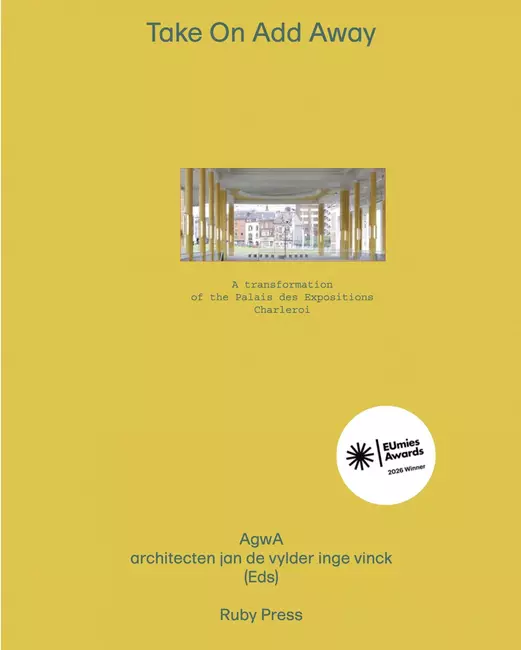
Take On Add Away – A transformation of the Palais des Expositions Charleroi
Un projet de transformation remarquable primé au Mies van der Rohe Award 2026 Un monument à l’optimisme industriel — et à sa réinvention radicale [...]
- PublicationsAuteur
Victor MEESTERS (Rotor) et Vincent LAUREAUPublisher
Collection « Villes terrestres »Published on 03/02/2026

20 PETITES LEÇONS D’ÉCONOMIE DE MATIÈRE
Un manuel de réemploi pour tous les constructeurs – étudiants, professionnels et amateurs. 20 exemples concrets pour que le réemploi devienne enfin la règle. [...]
