
- Publications192 pagesSous la direction de
Emeline Bailly & Dorothée MarchandPrice
24,90 €ISBN
9782804720285Published on 11/11/2021
Ville numérique
La qualité urbaine en question
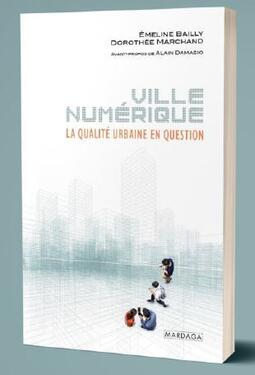
© WBA How are connected objects in cities perceived, represented and experienced? Do they influence our relationship with places and other people? Do they call into question our representations of the city and its quality?
In Ville numérique (éditions Mardaga), Emeline Bailly and Dorothée Marchant analyse the impacts of the digital city on our understanding of urban quality. Based on interdisciplinary empirical research, they explore how smartphones and urban digital objects create distance between us and places and other people and change our perception of urban landscapes. While digital technology is transforming our relationship with cities, forms of reterritorialisation appear. Places represent a strong unity of meaning, where nature encourages urban reanchoring. In this case, wouldn’t the challenge be to create links and come up with forms of urban living that combine urban and digital transitions with quality of living?
‘How can we talk about the quality of places when the digital city distance us from them? How are the digital objects that are connected to an urban space perceived and used? Do they form part of local amenities? Do they influence our relationship with places and their landscapes? ’
Documents
CP_VILLE_NUMERIQUE_CHLOE__1_.pdfVille numérique
- PublicationsSous la direction de
Jean-Marc BasynAuteur
Sous la direction de Jean-Marc Basyn. Articles de : Véronique Boone, Tom Broes, Angélique Campens, Maurizio Cohen, Robby Fivez, Jacinthe Gigou, Gérald Ledent, Réjean Legault, Géry Leloutre, Laura Lievevrouw, Giulia Marino, Arthur Schweisthal, Sophia Sentissi, Emma Simonin, Iwan Strauven, Stephanie Van de Voorde, Ellen Van Impe, Tom Verhofstadt.Published on 28/04/2026

Brutalisme Bruxelles
Ce premier ouvrage de référence consacré au brutalisme à Bruxelles et sa proche périphérie aborde ce mouvement des années 1950 – 1980 dans sa diversité : immeubles de bureaux, logements, campus universitaires, hôpitaux, centres culturels, lieux de culte, stations de métro ou encore interventions d’artistes. [...]
- PublicationsAuteur
Rédaction : AgwA, architectes Jan De Vylder et Inge Vinck, Photos : Filip DujardinPublished on 20/04/2026
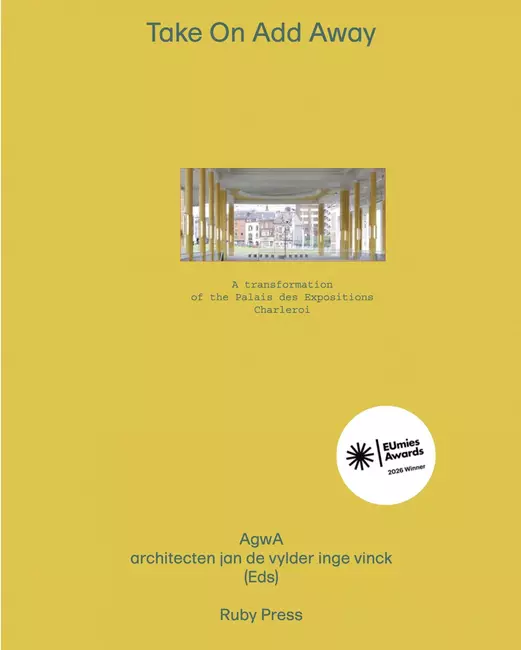
Take On Add Away – A transformation of the Palais des Expositions Charleroi
Un projet de transformation remarquable primé au Mies van der Rohe Award 2026 Un monument à l’optimisme industriel — et à sa réinvention radicale [...]
- PublicationsAuteur
Victor MEESTERS (Rotor) et Vincent LAUREAUPublisher
Collection « Villes terrestres »Published on 03/02/2026

20 PETITES LEÇONS D’ÉCONOMIE DE MATIÈRE
Un manuel de réemploi pour tous les constructeurs – étudiants, professionnels et amateurs. 20 exemples concrets pour que le réemploi devienne enfin la règle. [...]
