
- PublicationsPublisher
Maison CFCAuteur
Author: Aliénor Debrocq
Dimensions: 140 x 205 mm
Pages: 176
Language: FR
Publication date: 21/08/2025Price
21 eurosISBN
978-2-87572-118-1Published on 27/08/2025
Nos utopies
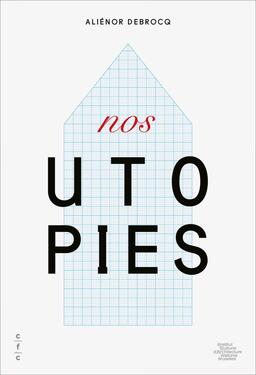
© Editions CFC When fiction meets architecture to imagine the city differently
Nos Utopies gives voice to the reflections of a generation of architecture students committed to confronting the urgencies of our time. Drawing on work carried out by UCLouvain students on urban utopias, Aliénor Debrocq composes a collective narrative that blends texts and images, where fiction becomes both a critical and sensitive tool. Implicitly, the political dimension of architecture comes into focus. Climate change, gentrification, inequalities: these projects sketch out other ways of inhabiting the world.
A book by Aliénor Debrocq, with a foreword by Gérald Ledent, co-published with the Institut Culturel d’Architecture Wallonie-Bruxelles (ICA).
This publication is part of ICA’s 2025 program dedicated to utopias, and accompanies the September exhibition Building Fictions, which will showcase the spatialized work of Aliénor Debrocq, Gérald Ledent, and students from UCLouvain (LOCI).
Aliénor Debrocq is a writer, journalist, and professor of literature at the Royal Academy of Fine Arts in Brussels. Gérald Ledent, professor at the Faculty of LOCI at UCLouvain, coordinates this research and teaching project on the uses of space and architecture.
- PublicationsAuteur
Comité de rédaction : Kelly Hendriks • Pavel Kunysz • Gérald Ledent • Virginie Pigeon • Cécile Vandernoot
Auteur·ices : Audrey Contesse • Émeline Curien • Stéphanie Dadour • Karine Dana • Kelly Hendriks • Pavel Kunysz • Gérald Ledent • Giulia Marino • Maria Anita Palumbo • Virginie Pigeon • Cécile Vandernoot • Stéphanie Van Doosselaere
Récit photographique : Karine DanaPublished on 01/06/2026
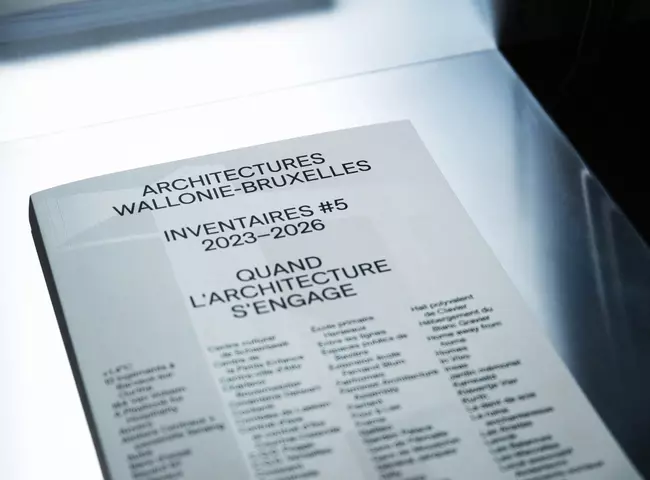
Architectures Wallonie-Bruxelles Inventaires #5 2023-2026
Quand l’architecture s’engage explore la manière dont les métiers et les outils de l’architecture, et plus largement la culture architecturale, se [...]Quand l'architecture s'engage
- PublicationsSous la direction de
Jean-Marc BasynAuteur
Sous la direction de Jean-Marc Basyn. Articles de : Véronique Boone, Tom Broes, Angélique Campens, Maurizio Cohen, Robby Fivez, Jacinthe Gigou, Gérald Ledent, Réjean Legault, Géry Leloutre, Laura Lievevrouw, Giulia Marino, Arthur Schweisthal, Sophia Sentissi, Emma Simonin, Iwan Strauven, Stephanie Van de Voorde, Ellen Van Impe, Tom Verhofstadt.Published on 28/04/2026

Brutalisme Bruxelles
Ce premier ouvrage de référence consacré au brutalisme à Bruxelles et sa proche périphérie aborde ce mouvement des années 1950 – 1980 dans sa diversité : immeubles de bureaux, logements, campus universitaires, hôpitaux, centres culturels, lieux de culte, stations de métro ou encore interventions d’artistes. [...]
- PublicationsAuteur
Rédaction : AgwA, architectes Jan De Vylder et Inge Vinck, Photos : Filip DujardinPublished on 20/04/2026
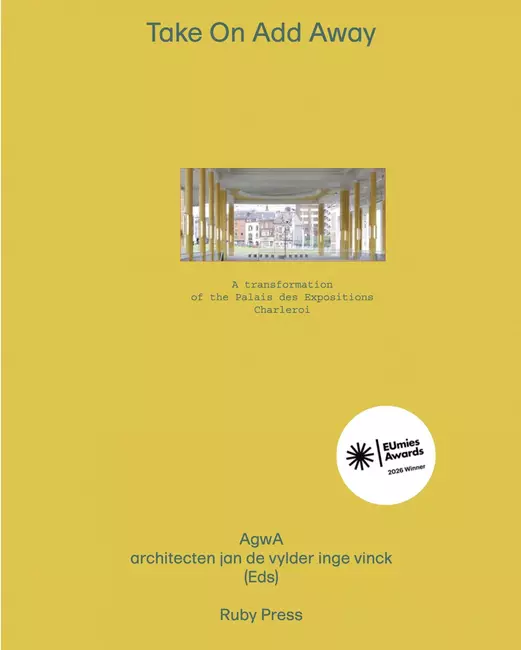
Take On Add Away – A transformation of the Palais des Expositions Charleroi
Un projet de transformation remarquable primé au Mies van der Rohe Award 2026 Un monument à l’optimisme industriel — et à sa réinvention radicale [...]
