- ConcoursDeadline
Publié le 16/03/2026
Tallinn Architecture Biennale 2026 - TAB 2026
© TAB Conceptual Background
In dialogue with the Tallinn Architecture Biennale 2026 (TAB 2026) theme, How Much?, the installation competition addresses a central architectural question: how can innovation emerge under conditions of constraint, limited resources, and unfavourable budgets?
Luxury is commonly associated with abundance: expensive materials, generous budgets, and material excess. Yet architecture has long demonstrated that richness may also arise from limitation, ingenuity, and the intelligent transformation of the ordinary. Budget Bougie asks participants to reconsider what luxury might mean in architectural terms. Can limited means produce spaces that feel refined, generous, or even indulgent? Can resourcefulness stand in for expense?
The competition invites proposals for a temporary pavilion that explores how simple materials, modest budgets, and inventive design strategies can generate an elevated spatial experience—one in which thoughtful design transforms the everyday into something remarkable.
Budget
Money has always shaped architecture. Budgets determine materials, scale, methods of construction, and, ultimately, the social and spatial possibilities of a project. Architecture therefore operates in constant negotiation between ambition and constraint. Designers must translate financial limits into spatial strategies, deciding where to invest, where to simplify, and how to create value beyond cost.
In this sense, money is not merely a restriction; it is also a design instrument. It shapes priorities, hierarchies, and the ways architecture communicates quality, care, and intention. Budget is thus a crucial link between architecture and everyday reality.
Bougie
“Bougie,” derived from bourgeois, refers to a form of aspirational luxury: spaces that signal refinement, comfort, and status through polished finishes, fashionable materials, and curated aesthetics. In architectural discourse, the term carries an ambivalent charge. It may suggest elegance and desirability, but it may also imply theatricality, pretension, or the superficial performance of prestige.
The idea of Budget Bougie emerges precisely from the tension between these terms. It asks how architecture might reinterpret the signs of luxury through resourcefulness rather than expense, transforming limited means into spaces that nevertheless feel generous, refined, and culturally resonant.
Competition Task
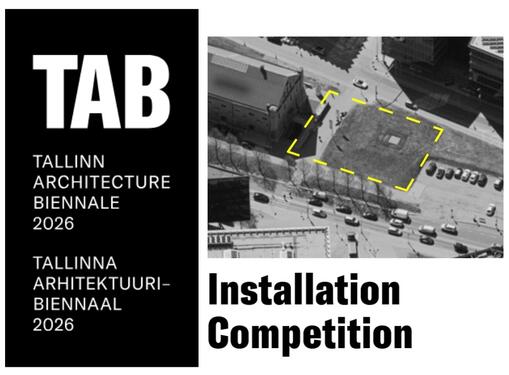
Participants are invited to design a temporary pavilion for the area in front of the Estonian Museum of Architecture. The proposal should explore how architecture can produce value, quality, and desirability within the limits of a restricted budget. The pavilion should transform modest means into a spatial experience that feels refined, generous, or luxurious.
Proposals may experiment with new or rediscovered construction methods, creatively reinterpret ordinary materials, or develop collaborative strategies that optimise resources and reduce costs.
Guiding Questions
- How can architecture create value, quality, and desirability within a limited budget?
- Can innovation in construction—whether through new technologies or rediscovered traditional methods—offer more efficient and affordable alternatives to conventional building?
- How might ordinary materials, techniques, or objects be reimagined and reframed as desirable?
- Can collaboration across disciplines reduce costs over a building’s full life cycle, including labour, material use, maintenance, and time?
Competition Area
The site for the installation competition is the area in front of the Estonian Museum of Architecture, located at the edge of Tallinn’s Old Town and housed in the historic Rotermann Salt Storage—itself a notable example of the city’s industrial architectural heritage. The area in front of the museum forms part of a lively pedestrian route connecting the harbour and the city Center.
Over the past decade, the surrounding district has undergone rapid development. Recent additions, such as the Golden Gate office building, exemplify a contemporary bourgeois architecture that performs abundance and exuberance through its outer image while often remaining conventional in its underlying logic. Against this backdrop, the proposed Budget Bougie installation is intended to operate as a deliberate contrast.
The construction area includes a paved pedestrian surface alongside a small grass-covered hill. The maximum permitted height of the installation is 5 metres. A pedestrian passage must be maintained between the Estonian Museum of Architecture and the landscape in front of the museum.
The winning installation will be constructed in August 2026 and inaugurated during the opening of the Tallinn Architecture Biennale on 9 September 2026.
Competition Details
Eligibility
The competition is open to individual architects and teams, provided that at least one team member holds a degree in architecture. Participants are not required to hold a professional licence. Students are not eligible.
Prizes and Budget
- 1st Prize: €2,999 author fee.
The current realisation budget for the installation is €14,999. Successful proposals must be fully realisable within this budget. The amount includes materials, construction, dismantling, transportation, engineering consultations, and travel costs for the authors of the winning proposal. - 2nd Prize: €999 author fee.
Feature in the TAB 2026 catalogue and a TAB 2026 pass. - 3rd Prize: €499 author fee.
Feature in the TAB 2026 catalogue and a TAB 2026 pass.
Deadline and Time Frame
- March 2026 — Competition announced
- 29 April 2026 — Submission deadline, 23:59 EET
- 06 May 2026 — Announcement of the winning project(s)
- August 2026 — Construction of the installation
- 9 September 2026 — Opening of TAB 2026 and the installation
Competition materials can be downloaded here.

Wallonie-Bruxelles Architectures est une agence de promotion culturelle et économique des architectes de Bruxelles et de Wallonie sur la scène internationale.